

Hey there! As a supplier of transformer radiator production lines, I've seen firsthand the numerous advantages that these lines bring to the table. In this blog post, I'm gonna break down why using a transformer radiator production line can be a game - changer for your business.
1. Efficiency Boost
One of the most obvious advantages of a transformer radiator production line is the massive efficiency improvement. In a traditional production setup, workers have to move between different workstations, pick up tools, and manually perform each step of the radiator manufacturing process. This not only takes a long time but also increases the chances of human error.
With a production line, everything is streamlined. Each machine on the line is designed to perform a specific task, and the radiators move smoothly from one station to the next. For example, the Loading and Unloading Systems ensure that raw materials are quickly and accurately loaded onto the line and finished products are efficiently removed. This reduces the time spent on handling and transportation within the production facility, allowing you to produce more radiators in less time.

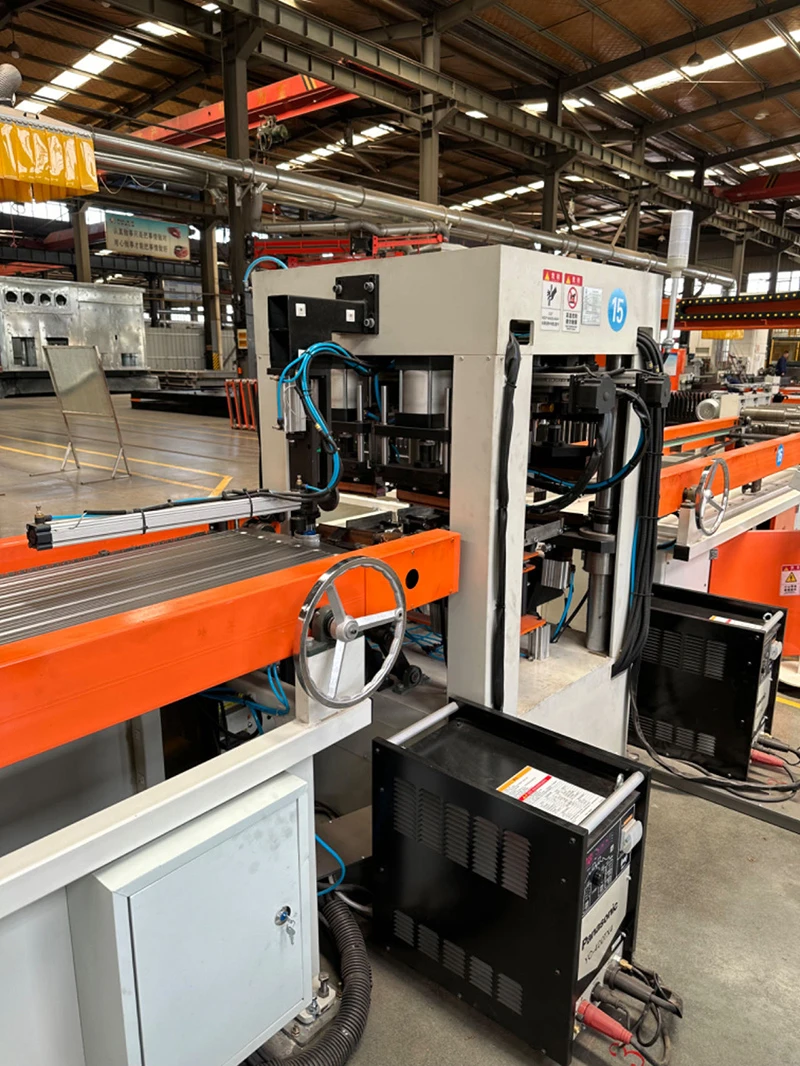
Let's say you're producing transformers for a large - scale power project. Time is of the essence, and with a transformer radiator production line, you can meet tight deadlines without compromising on quality. You can increase your production output by up to 50% or even more compared to a non - automated setup. This means you can take on more orders and expand your business.
2. Consistent Quality
Quality is crucial when it comes to transformer radiators. Any flaw in the radiator can lead to overheating of the transformer, which can cause system failures and even pose a safety risk. A production line helps in maintaining a high and consistent level of quality.
Each machine on the line is calibrated to perform its task with precision. For instance, the End Argon Arc Welding Machine is designed to create strong and uniform welds. The welding parameters are set and controlled automatically, ensuring that every weld on every radiator is of the same high quality. This eliminates the variability that can occur with manual welding, where different operators may have different skills and techniques.
In addition, the production line often includes quality control checkpoints. Sensors and inspection devices are installed at various points to detect any defects or deviations from the specifications. If a radiator fails the quality check, it can be immediately removed from the line for rework or disposal. This way, you can be confident that every radiator that leaves your production facility meets the highest standards.
3. Cost - Effectiveness
At first glance, investing in a transformer radiator production line may seem expensive. However, in the long run, it can save you a significant amount of money.
Firstly, as mentioned earlier, the increased efficiency means you can produce more with the same amount of resources. You need fewer workers to operate the production line compared to a manual setup. While you do need to train your employees to operate and maintain the machines, the overall labor cost is reduced. You can also save on labor - related expenses such as overtime pay and benefits.
Secondly, the consistent quality reduces the cost of rework and warranty claims. When your radiators are of high quality from the start, you don't have to spend money on fixing defective products or dealing with customer complaints. This not only saves money but also protects your brand reputation.
Moreover, the production line is designed to optimize the use of raw materials. The Automatic Plate Combination Machine can cut and combine plates with minimal waste. This reduces the cost of raw materials, which is a significant part of the production cost.
4. Flexibility and Customization
Modern transformer radiator production lines are highly flexible. They can be easily reconfigured to produce different types and sizes of radiators. Whether you need to produce radiators for small - scale distribution transformers or large - capacity power transformers, the production line can be adjusted accordingly.
You can change the settings of the machines to modify the dimensions, shape, and other specifications of the radiators. This allows you to meet the specific requirements of your customers. For example, if a customer needs a radiator with a special fin design or a unique mounting configuration, you can easily make the necessary adjustments on the production line.
This flexibility gives you a competitive edge in the market. You can offer a wider range of products and quickly adapt to changing customer demands. You don't have to invest in a new production setup every time you get a different order.
5. Safety
Safety is a top priority in any manufacturing facility. A transformer radiator production line enhances safety in several ways.
Since most of the tasks are automated, workers are less exposed to dangerous processes such as welding and heavy lifting. The machines are equipped with safety features such as emergency stop buttons, protective guards, and sensors to detect any abnormal conditions. This reduces the risk of accidents and injuries in the workplace.
In addition, the production line is designed to be ergonomic. The workstations are arranged in a way that reduces the physical strain on the workers. For example, the loading and unloading systems are designed to be at a comfortable height, so workers don't have to bend or stretch too much.
6. Data Collection and Analysis
Many modern transformer radiator production lines are equipped with data collection and analysis capabilities. Sensors on the machines collect data on various parameters such as temperature, pressure, and production speed. This data can be used to monitor the performance of the production line in real - time.
You can analyze the data to identify any bottlenecks or inefficiencies in the production process. For example, if you notice that the production speed slows down at a particular workstation, you can investigate the cause and take corrective actions. You can also use the data to predict maintenance needs. By analyzing the performance data of a machine, you can schedule maintenance before a breakdown occurs, reducing downtime.
This data - driven approach allows you to continuously improve your production process and make informed decisions about your business.
Conclusion
As you can see, there are numerous advantages to using a transformer radiator production line. From increased efficiency and consistent quality to cost - effectiveness and flexibility, it can transform your business. If you're in the transformer radiator manufacturing industry, it's definitely worth considering investing in a production line.
If you're interested in learning more about our transformer radiator production lines or want to discuss a potential purchase, don't hesitate to reach out. We're here to help you find the best solution for your business needs.
References
- Industry reports on transformer manufacturing efficiency
- Studies on quality control in radiator production
- Research on cost - benefit analysis of automated production lines