

In the manufacturing industry, leveling and trimming machines play a crucial role in ensuring the quality and precision of metal sheets and plates. As a leading supplier of leveling and trimming machines, I have witnessed firsthand the importance of a well - designed control system in these machines. This blog will explore the role of the control system in a leveling and trimming machine, highlighting its significance in enhancing efficiency, accuracy, and overall performance.
1. Precision Control of Machine Movements
One of the primary functions of the control system in a leveling and trimming machine is to precisely control the movements of various components. This includes the movement of the leveling rollers, trimming blades, and the conveyor system.
The leveling rollers are responsible for flattening the metal sheets. The control system adjusts the pressure and position of these rollers with high precision. By accurately controlling the gap between the rollers and the speed at which they rotate, it can eliminate any unevenness or curvature in the metal sheets. For example, if a metal sheet has a slight upward bend, the control system can increase the pressure on the upper rollers at the appropriate section to gradually flatten the sheet.
The trimming blades, on the other hand, are used to cut the edges of the metal sheets to the desired width. The control system ensures that the blades move smoothly and accurately along the edges of the sheet. It controls the cutting speed, the depth of the cut, and the alignment of the blades. This precision is essential to achieve clean and straight edges, which are often required in industries such as automotive, aerospace, and construction.
The conveyor system is also an important part of the leveling and trimming machine. The control system regulates the speed and direction of the conveyor to ensure that the metal sheets are fed into the machine at a consistent rate and are properly positioned for leveling and trimming operations. This helps to maintain a continuous production flow and reduces the chances of jams or misalignments.
2. Quality Assurance and Monitoring
The control system in a leveling and trimming machine also plays a vital role in quality assurance. It is equipped with sensors and monitoring devices that can detect various parameters during the leveling and trimming process.
For instance, sensors can measure the thickness of the metal sheet at different points. If the thickness deviates from the specified range, the control system can automatically adjust the leveling process to correct it. This helps to ensure that all the sheets produced have a uniform thickness, which is crucial for the quality of the final product.
In addition, the control system can monitor the surface quality of the metal sheets. It can detect any scratches, dents, or other defects on the surface. If a defect is detected, the system can either mark the defective area for further inspection or stop the machine to prevent the production of more defective sheets. This proactive approach to quality control helps to reduce waste and improve the overall efficiency of the manufacturing process.
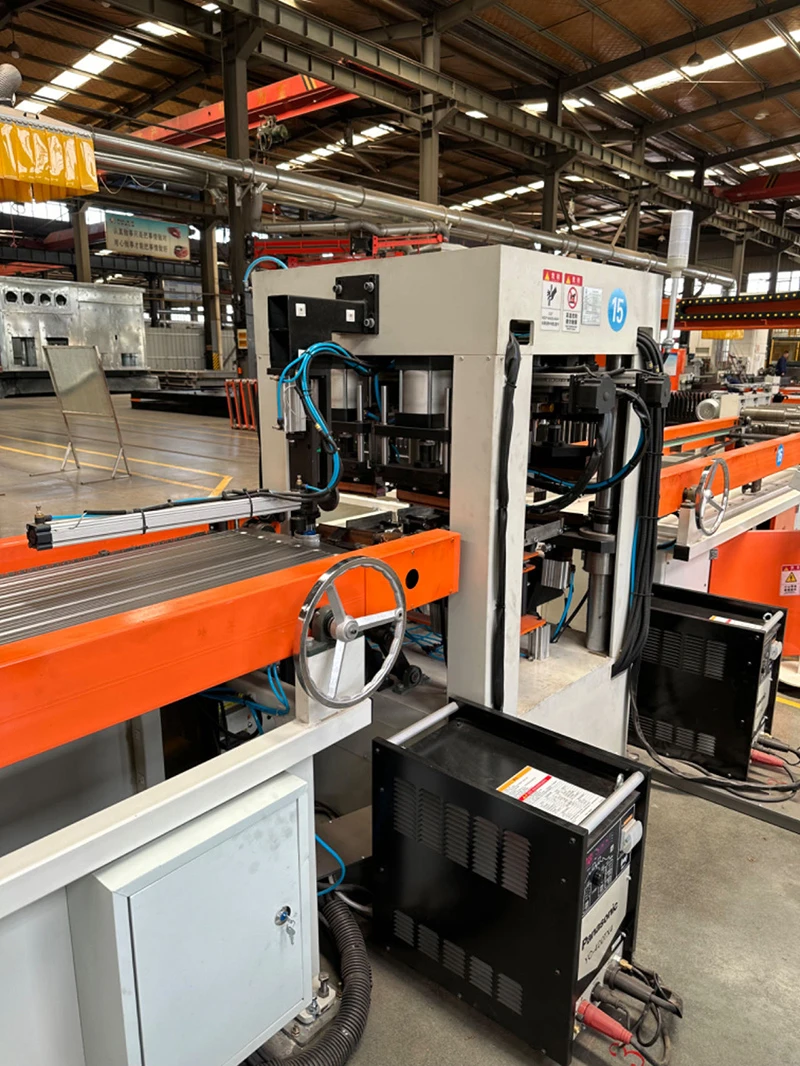

3. Process Optimization and Flexibility
A well - designed control system allows for process optimization in a leveling and trimming machine. It can store different sets of operating parameters for various types of metal sheets and production requirements. This means that operators can easily switch between different production runs without having to manually adjust the machine settings each time.
For example, if a manufacturer needs to level and trim stainless steel sheets one day and aluminum sheets the next, the control system can recall the appropriate settings for each material. These settings may include the optimal roller pressure, cutting speed, and conveyor speed for each type of metal. This flexibility not only saves time but also ensures that the machine operates at its best performance for different materials.
Moreover, the control system can be programmed to perform complex operations. It can create custom leveling and trimming patterns based on the specific requirements of the customer. This is particularly useful in industries where unique or non - standard metal products are needed. For example, in the production of custom - made automotive parts, the control system can be programmed to create special edge profiles or cutouts on the metal sheets.
4. Safety and Operator Convenience
Safety is a top priority in any manufacturing environment, and the control system in a leveling and trimming machine plays an important role in ensuring the safety of operators. It is equipped with various safety features such as emergency stop buttons, safety interlocks, and overload protection.
The emergency stop button allows operators to quickly stop the machine in case of an emergency. The safety interlocks prevent the machine from operating if certain safety conditions are not met, such as the guard doors being open. The overload protection feature monitors the power consumption and mechanical stress of the machine. If an overload is detected, the control system will automatically shut down the machine to prevent damage and potential safety hazards.
In terms of operator convenience, the control system usually has a user - friendly interface. Operators can easily input the required parameters, monitor the machine status, and access diagnostic information through a touch - screen display or a control panel. This makes it easier for operators to operate the machine, even with minimal training.
5. Integration with Other Manufacturing Equipment
In modern manufacturing plants, leveling and trimming machines are often part of a larger production line. The control system in these machines can be integrated with other manufacturing equipment such as Multi Spot Welding Machine, End Argon Arc Welding Machine, and Automatic Unreeling Machine.
This integration allows for seamless communication and coordination between different machines. For example, the control system of the leveling and trimming machine can send signals to the automatic unreeling machine to start or stop the feeding of metal coils based on the production requirements. It can also communicate with the welding machines to ensure that the trimmed metal sheets are properly positioned and prepared for welding operations. This integration helps to streamline the entire production process, reduce manual intervention, and improve overall productivity.
Conclusion
In conclusion, the control system is the heart of a leveling and trimming machine. It is responsible for precision control of machine movements, quality assurance, process optimization, safety, and integration with other manufacturing equipment. As a supplier of leveling and trimming machines, we understand the importance of a reliable and advanced control system in meeting the diverse needs of our customers.
If you are in the market for a high - quality leveling and trimming machine, we invite you to contact us for a detailed discussion about your specific requirements. Our team of experts will be happy to assist you in selecting the most suitable machine and control system for your production needs.
References
- Smith, J. (2018). Advanced Control Systems in Metalworking Machines. Manufacturing Technology Journal, 25(3), 45 - 52.
- Johnson, A. (2019). Quality Assurance in Leveling and Trimming Processes. Industrial Engineering Review, 32(2), 67 - 74.
- Brown, R. (2020). Integration of Manufacturing Equipment for Improved Productivity. Automation and Robotics Magazine, 18(4), 89 - 96.