

Hey there! As a supplier of Loading and Unloading Systems, I've seen firsthand how these systems interact with Warehouse Management Systems (WMS). It's a pretty fascinating topic, and I'm excited to share my insights with you.
Let's start by understanding what loading and unloading systems and warehouse management systems are. Loading and unloading systems are all about moving goods in and out of a warehouse efficiently. This can include things like conveyor belts, forklifts, and automated guided vehicles (AGVs). On the other hand, a Warehouse Management System is a software that helps manage all the operations within a warehouse, from inventory management to order fulfillment.
One of the key ways loading and unloading systems interact with WMS is through data sharing. When a shipment arrives at the warehouse, the loading system needs to communicate with the WMS to let it know what's coming in. This includes details like the quantity, type, and destination of the goods. The WMS then uses this information to plan the storage and handling of the incoming items. For example, if a large shipment of a particular product arrives, the WMS can direct the loading system to place it in a specific area of the warehouse where there is enough space.
Conversely, when it's time to unload goods for an outgoing order, the WMS provides instructions to the unloading system. It tells the system which products need to be picked, in what quantity, and where they should be sent. This coordination ensures that the right products are shipped to the right customers at the right time.
Another important aspect of the interaction is real - time tracking. Loading and unloading systems are often equipped with sensors that can track the movement of goods. These sensors send data to the WMS, which can then provide real - time visibility of the inventory levels and the movement of goods within the warehouse. For instance, if a forklift is moving a pallet of goods from one location to another, the WMS can update its records immediately, showing the new location of the pallet. This real - time tracking helps in reducing errors, improving efficiency, and providing better customer service.

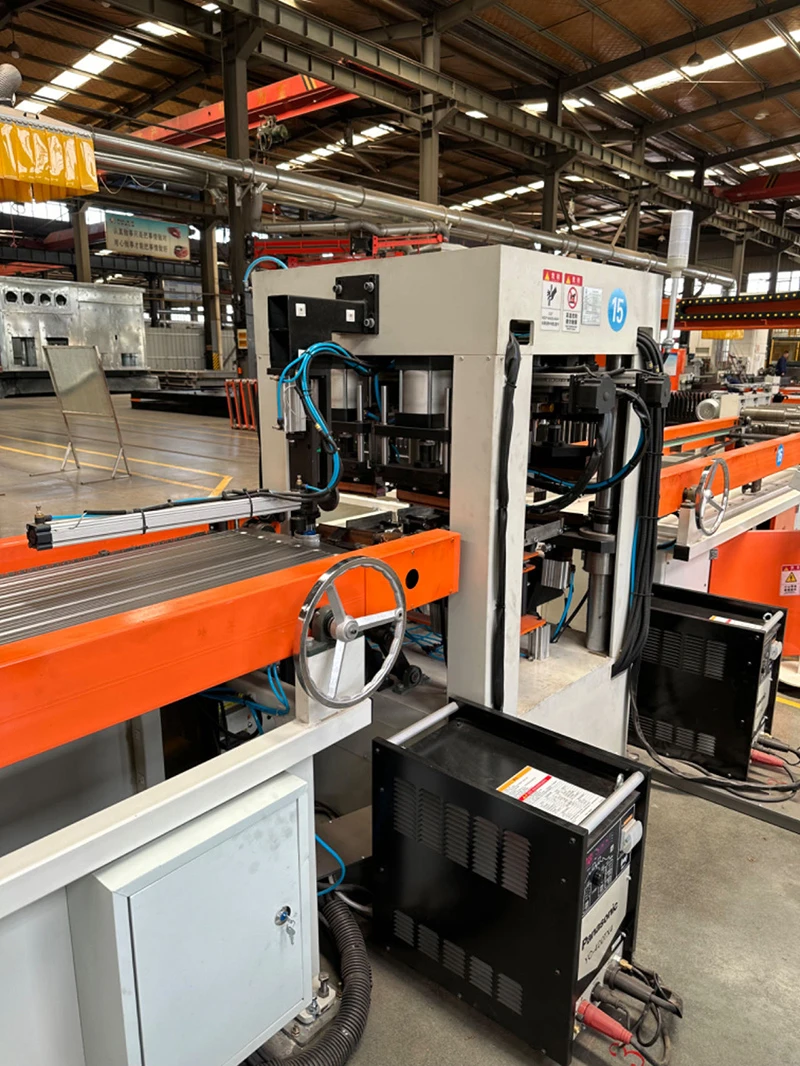
Automation is also a big part of this interaction. Many modern loading and unloading systems are highly automated, and they can integrate seamlessly with the WMS. For example, an Automatic Roll Slitting Machines can be programmed to work in sync with the WMS. When an order comes in for a specific quantity of slit rolls, the WMS can send a signal to the machine, which then starts the slitting process. The machine can also send feedback to the WMS once the job is done, allowing the WMS to update the inventory records.
Similarly, conveyor systems can be automated to work based on the instructions from the WMS. They can move goods from the loading dock to the storage area or from the storage area to the unloading dock without much human intervention. This not only speeds up the process but also reduces the risk of human error.
However, integrating loading and unloading systems with a WMS is not always a walk in the park. There can be some challenges. One of the main challenges is compatibility. Different loading and unloading systems and WMS may use different data formats and communication protocols. This can make it difficult for them to communicate effectively. To overcome this, companies may need to invest in middleware or use standardized interfaces to ensure smooth data transfer between the two systems.
Another challenge is the cost of implementation. Upgrading or installing new loading and unloading systems that can integrate with a WMS can be expensive. There are also costs associated with training the staff to use the new systems. But in the long run, the benefits of improved efficiency, reduced errors, and better inventory management usually outweigh the initial costs.
Let's talk about some specific examples of how this interaction works in different industries. In the e - commerce industry, where order volumes can be extremely high, the interaction between loading and unloading systems and WMS is crucial. A large e - commerce warehouse may receive hundreds or even thousands of orders every day. The WMS needs to quickly process these orders and direct the unloading system to pick the right products from the shelves. The loading system then needs to pack and ship these products as fast as possible.
In the manufacturing industry, loading and unloading systems are used to move raw materials into the production area and finished products out of the factory. The WMS coordinates this movement, ensuring that there is always enough raw material available for production and that the finished products are stored and shipped efficiently. For example, an End Argon Arc Welding Machine in a manufacturing plant may require a specific type of metal sheet as raw material. The WMS can direct the loading system to supply the right amount of metal sheets to the welding machine at the right time.
In the food and beverage industry, where product freshness and safety are critical, the interaction between the two systems is also very important. The WMS can ensure that perishable goods are stored at the right temperature and humidity levels. The loading and unloading systems are then used to move these goods in and out of the cold storage areas quickly to maintain their quality.
As a supplier of Loading and Unloading Systems, I've worked with many companies to help them optimize this interaction. We offer a range of systems that are designed to integrate easily with different WMS. Our Leveling and Trimming Machine is a great example. It can be connected to a WMS, allowing for precise control of the trimming process based on the order requirements.
If you're looking to improve the efficiency of your warehouse operations, it's essential to have a well - integrated loading and unloading system and WMS. The right combination can lead to significant cost savings, increased productivity, and better customer satisfaction.
If you're interested in learning more about how our Loading and Unloading Systems can interact with your existing or new Warehouse Management System, or if you want to discuss your specific requirements, don't hesitate to reach out. We're here to help you find the best solutions for your business.
References
- "Warehouse Management Systems: A Comprehensive Guide" by John Doe
- "Automation in Loading and Unloading Systems" by Jane Smith
- Industry reports on supply chain management and warehouse operations