

As a supplier of roll forming machines from a factory, I am often asked about the cooling systems of these essential industrial tools. In this blog post, I will delve into the details of what the cooling system of roll forming machines is, its importance, different types, and how it impacts the overall performance of the machines.
The Importance of Cooling Systems in Roll Forming Machines
Roll forming machines are used to shape metal sheets into various profiles by passing them through a series of rollers. During this process, a significant amount of heat is generated due to friction between the metal sheets and the rollers, as well as the mechanical work done by the machine. If this heat is not properly managed, it can lead to several problems.
Firstly, excessive heat can cause thermal expansion of the machine components, particularly the rollers. This can result in dimensional inaccuracies in the formed profiles, leading to quality issues and potentially rendering the products unusable. Secondly, high temperatures can accelerate wear and tear on the machine parts, reducing their lifespan and increasing maintenance costs. Moreover, overheating can also pose a safety risk to the operators and the surrounding environment.
Therefore, a well - designed cooling system is crucial for maintaining the accuracy, efficiency, and longevity of roll forming machines. It helps to keep the machine components at an optimal operating temperature, ensuring consistent product quality and minimizing downtime for repairs.
Types of Cooling Systems in Roll Forming Machines
Air - Cooling Systems
Air - cooling systems are one of the most common types of cooling systems used in roll forming machines. These systems work by using fans to blow air over the hot components of the machine. The moving air absorbs the heat from the components and carries it away, dissipating it into the surrounding environment.
One of the main advantages of air - cooling systems is their simplicity and low cost. They are relatively easy to install and require minimal maintenance. Additionally, air - cooling systems do not require a separate water source, which makes them suitable for locations where water availability is limited.

However, air - cooling systems have some limitations. They are generally less efficient than liquid - cooling systems, especially in high - heat applications. The cooling capacity of air - cooling systems is also affected by the ambient temperature and humidity. In hot and humid environments, the ability of air to absorb heat is reduced, which can lead to inadequate cooling.
Liquid - Cooling Systems
Liquid - cooling systems, on the other hand, use a liquid (usually water or a water - glycol mixture) as the cooling medium. The liquid is circulated through a series of pipes or channels in the machine, absorbing heat from the hot components. The heated liquid is then pumped to a heat exchanger, where it releases the heat to the surrounding air or another cooling medium.
Liquid - cooling systems offer several advantages over air - cooling systems. They have a higher cooling capacity, which means they can effectively remove more heat from the machine components. This makes them suitable for high - speed and high - power roll forming machines that generate a large amount of heat. Liquid - cooling systems are also less affected by ambient temperature and humidity, providing more consistent cooling performance.
However, liquid - cooling systems are more complex and expensive than air - cooling systems. They require a pump, a heat exchanger, and a water source, which increases the initial investment and the operating costs. Additionally, liquid - cooling systems require regular maintenance to prevent corrosion and scaling in the pipes and channels.
Components of a Cooling System
Regardless of the type of cooling system, there are several key components that are commonly found in roll forming machine cooling systems.
Coolant
The coolant is the medium that transfers heat from the machine components to the heat exchanger. As mentioned earlier, water or a water - glycol mixture is commonly used as the coolant. Water has a high specific heat capacity, which means it can absorb a large amount of heat without a significant increase in temperature. The addition of glycol to the water helps to prevent freezing in cold environments and reduces the risk of corrosion.
Pumps
Pumps are used to circulate the coolant through the cooling system. They ensure that the coolant flows at a sufficient rate to effectively remove heat from the machine components. The size and capacity of the pump depend on the size and heat load of the roll forming machine.
Heat Exchangers
Heat exchangers are responsible for transferring the heat from the coolant to the surrounding environment. There are several types of heat exchangers, including air - cooled heat exchangers and water - cooled heat exchangers. Air - cooled heat exchangers use fans to blow air over the hot coolant pipes, while water - cooled heat exchangers use another liquid (usually water) to absorb the heat from the coolant.
Temperature Sensors
Temperature sensors are used to monitor the temperature of the machine components and the coolant. They provide feedback to the control system, which can adjust the operation of the cooling system to maintain the desired temperature. For example, if the temperature of the machine components exceeds a certain threshold, the control system can increase the speed of the pump or the fans to increase the cooling capacity.
Impact of Cooling Systems on Roll Forming Machine Performance
A well - functioning cooling system has a significant impact on the performance of roll forming machines.
Product Quality
By maintaining the machine components at a stable temperature, the cooling system helps to ensure dimensional accuracy in the formed profiles. This is particularly important for applications where tight tolerances are required, such as in the automotive and aerospace industries. Consistent cooling also reduces the risk of surface defects on the formed profiles, such as warping and cracking, resulting in higher - quality products.
Machine Efficiency
Cooling systems help to reduce the energy consumption of roll forming machines. When the machine components are kept at an optimal temperature, the friction between the metal sheets and the rollers is reduced, which means less energy is required to drive the machine. Additionally, a properly cooled machine operates more smoothly, reducing the likelihood of breakdowns and downtime, and increasing the overall productivity of the manufacturing process.
Machine Lifespan
Excessive heat can cause premature wear and tear on the machine components, leading to a shorter lifespan. A good cooling system helps to prevent this by reducing the thermal stress on the components. This extends the life of the machine, reducing the need for frequent replacements and saving on maintenance costs in the long run.
Conclusion
In conclusion, the cooling system of roll forming machines is a critical component that plays a vital role in ensuring the accuracy, efficiency, and longevity of the machines. Whether it is an air - cooling system or a liquid - cooling system, each type has its own advantages and limitations, and the choice depends on the specific requirements of the roll forming machine and the manufacturing environment.
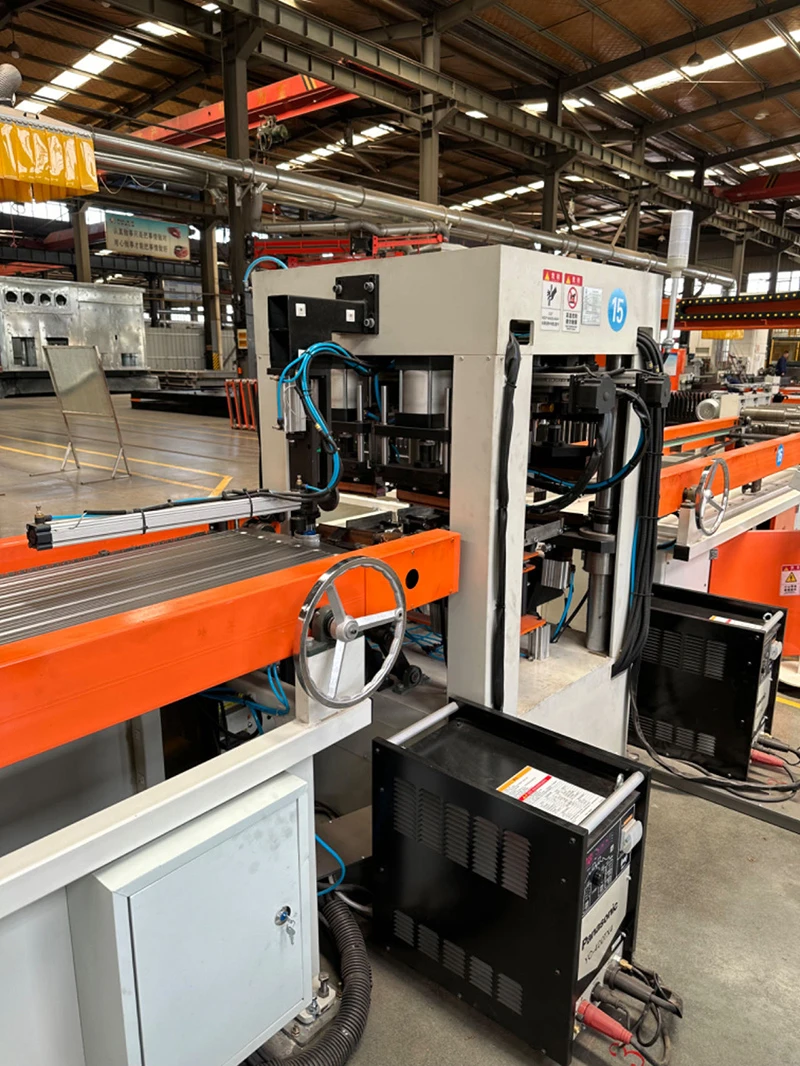
If you are in the market for a Roll Forming Machine, or if you need to upgrade the cooling system of your existing machine, we are here to help. Our factory offers a wide range of high - quality roll forming machines, as well as End Seam Welder Machine and End Argon Arc Welding Machine to meet your specific needs. Contact us today to discuss your requirements and explore how our products can enhance your manufacturing process.
References
- "Industrial Roll Forming: Principles and Practice" by Peter Kalpakjian and Steven R. Schmid
- "Heat Transfer in Industrial Processes" by Frank Kreith and Mark S. Bohn