

Hey there! As a supplier of Automatic End Shear Machines, I often get asked about the compatibility of these machines with different feeding systems. It's a crucial topic because the right combination can significantly boost productivity and efficiency in your production line. So, let's dive into it!
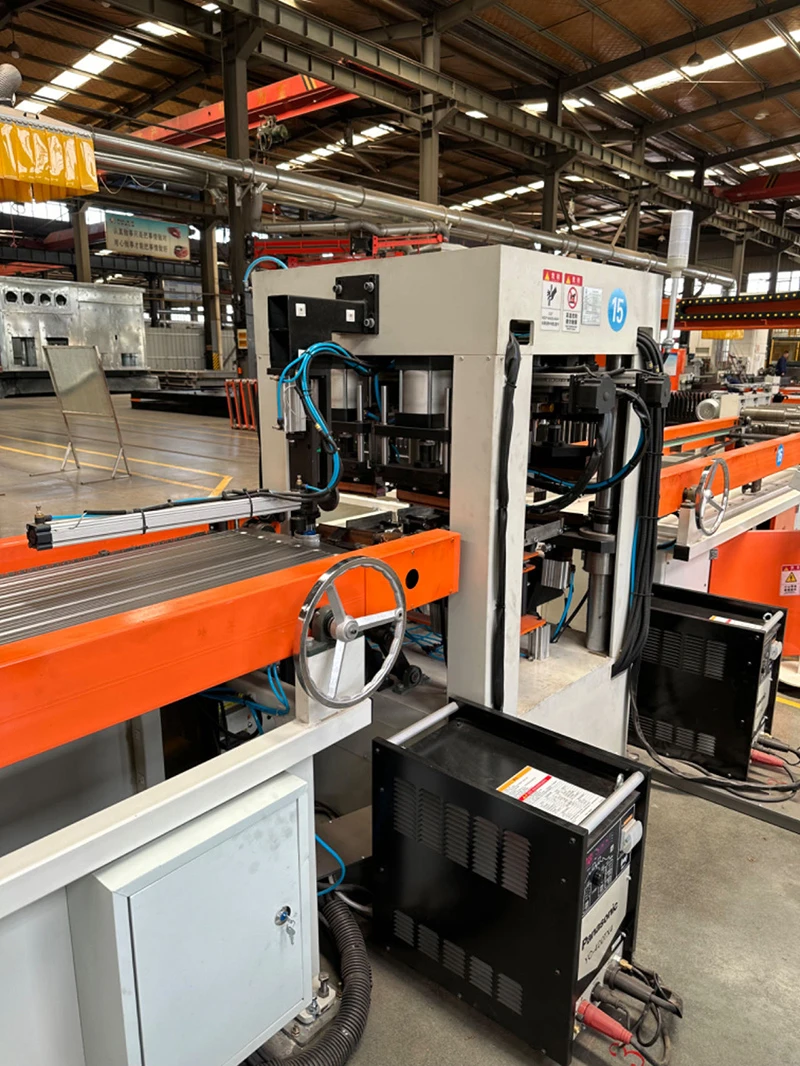
First off, what exactly is an Automatic End Shear Machine? Well, it's a nifty piece of equipment that precisely cuts the ends of various materials, like metal sheets or pipes, in an automated way. You can check out more details about it here. Its main job is to ensure a clean and accurate cut, which is super important for the quality of the final product.
Now, let's talk about different feeding systems. There are several types out there, and each has its own unique features and benefits.
Manual Feeding Systems
Manual feeding systems are the most basic type. With this system, an operator physically places the material into the Automatic End Shear Machine. It's simple and doesn't require a lot of complex machinery. This can be a good option for small-scale operations or when you're dealing with irregularly shaped materials that are hard to feed automatically.
However, it also has its drawbacks. Manual feeding is time-consuming and labor-intensive. There's also a higher risk of human error, which can lead to inaccurate cuts and wasted materials. Plus, it can be dangerous for the operator if proper safety measures aren't in place.
Roller Feeding Systems
Roller feeding systems use a set of rollers to move the material through the Automatic End Shear Machine. These rollers grip the material and pull it at a consistent speed, ensuring a smooth and even feed. This type of system is great for handling long, continuous materials like metal coils.
One of the big advantages of roller feeding systems is their high precision. They can accurately control the feeding length, which is crucial for getting precise cuts. They're also relatively easy to set up and operate. But they do have some limitations. For example, they may not work well with materials that are too thin or too flexible, as the rollers might not be able to grip them properly.
Belt Feeding Systems
Belt feeding systems are similar to roller feeding systems, but instead of rollers, they use a belt to move the material. The belt provides a larger contact area with the material, which can be beneficial for handling wider or heavier materials.
Belt feeding systems are known for their versatility. They can handle a wide range of materials, including those with irregular surfaces. They're also generally more gentle on the material compared to roller feeding systems, which can be important if you're working with delicate materials. However, belts can wear out over time and may need to be replaced periodically.
Vibratory Feeding Systems
Vibratory feeding systems use vibrations to move the material into the Automatic End Shear Machine. These systems are particularly useful for feeding small, individual parts. The vibrations help to align the parts and move them in a controlled manner.
Vibratory feeding systems are highly efficient for handling large quantities of small parts. They can quickly and accurately feed the parts into the machine, which can increase productivity. But they require careful tuning to ensure that the vibrations are just right for the specific material and part. If the vibrations are too strong or too weak, it can cause the parts to jam or not feed properly.
Compatibility Factors
So, how do you determine the compatibility of an Automatic End Shear Machine with different feeding systems? Here are some key factors to consider:
Material Type and Thickness
The type and thickness of the material you're working with are crucial. Different feeding systems are better suited for different materials. For example, as mentioned earlier, roller feeding systems may struggle with thin or flexible materials, while belt feeding systems can handle a wider range of thicknesses. You need to make sure that the feeding system can grip and move the material smoothly through the shear machine without causing any damage.
Production Volume
Your production volume also plays a role. If you have a high-volume production line, you'll need a feeding system that can keep up with the demand. Manual feeding systems are usually not suitable for high-volume operations, as they're too slow. In this case, automated feeding systems like roller or belt feeding systems would be a better choice.
Machine Speed
The speed of the Automatic End Shear Machine is another important factor. The feeding system needs to be able to feed the material at a speed that matches the cutting speed of the machine. If the feeding speed is too slow, it can slow down the entire production process. On the other hand, if the feeding speed is too fast, it can cause inaccurate cuts or even damage the machine.

Precision Requirements
If your production requires high precision, you'll need a feeding system that can provide accurate feeding. For example, if you're making parts with tight tolerances, a roller or vibratory feeding system might be more suitable because they can offer better control over the feeding length and position.
Other Related Machines
In addition to the feeding systems, there are other machines in the production line that can work in conjunction with the Automatic End Shear Machine. For example, the Dual Seam Welding Machine can be used after the shearing process to weld the cut pieces together. And the End Argon Arc Welding Machine can be used for more precise welding tasks.
Conclusion
In conclusion, the compatibility of an Automatic End Shear Machine with different feeding systems depends on several factors, including the material type, production volume, machine speed, and precision requirements. By carefully considering these factors, you can choose the right feeding system that will work seamlessly with your Automatic End Shear Machine and optimize your production process.
If you're interested in learning more about our Automatic End Shear Machines or need help choosing the right feeding system for your needs, don't hesitate to reach out. We're here to assist you in making the best decision for your business. Whether you're a small workshop or a large manufacturing plant, we can provide the solutions you need to improve your productivity and quality.
References
- "Manufacturing Processes for Engineering Materials" by Serope Kalpakjian and Steven R. Schmid
- "Automation, Production Systems, and Computer-Integrated Manufacturing" by Mikell P. Groover